A useful water damage estimate is a description of work tied to places you can identify. Ask for the affected rooms to be listed by name and for each proposed task to be tied to a surface, assembly, or object. A line that reads “dry kitchen” tells you very little about whether the estimate includes the wall behind the sink, the toe kick below the cabinets, the floor next to an appliance, or the room on the other side of a shared wall.
Look for boundaries. If the kitchen is connected to a dining room by the same floor, ask whether the assessment included the transition and where the proposed work ends. A room boundary in a quote does not always match a seam in the material. The contractor can explain whether a continuous surface affects the assessment or the repair decision. Record what can be seen now and what still needs evaluation.
Use a separate entry for each location with an unresolved condition. A note might say the cabinet was visually inspected, that the space below it could not be accessed, and that additional work will be proposed if access reveals damage. This gives you a question to revisit instead of an impression that everything in the room has already been evaluated. Have the contractor confirm what notice or approval is needed before opening anything.
If two contractors describe different boundaries, ask each to walk you through the difference. One may have quoted the rooms named in the initial call while the other inspected adjacent areas. One may have allowed for access that was unavailable when the other visited. Compare their reasons and documentation before comparing their prices. A room-level checklist makes that conversation easier for everyone involved.
Separate the estimate into distinct decisions
A water loss can involve several different types of work, and some are performed by separate trades. Source investigation and repair, water removal, material handling, drying, contents work, and reconstruction can each have their own scope. Ask which work is definite, which work is provisional, and which work belongs in a separate proposal. This matters even if one company coordinates more than one stage.
For example, a proposal could identify an initial visit to assess the damage, an estimate for equipment and monitoring, and a later estimate for rebuilding once the material conditions are known. Ask whether a decision to go ahead with the first stage commits you to any later work. If different stages require different types of qualified professionals, clarify who will make the referral and who will approve the next appointment.
Review the status of the source before authorizing work that depends on it. An assessment may proceed while a separate trade is investigating, but the person making the drying or repair plan needs to know if more water could enter. If you have a plumber’s report or a written update from a building manager, make it available to the people developing the next scope. Ask how the plan changes if the source still has not been identified.
A useful way to compare proposals is to give each stage its own line in a notebook. Write who will do the work, who can approve it, what document describes it, and what has to happen first. When a scope changes, note the stage affected instead of replacing the entire list. You can then see whether the change is about access, equipment, source repair, or the floor and wall finishes that will be installed later.
What an inspection can tell you about a wall
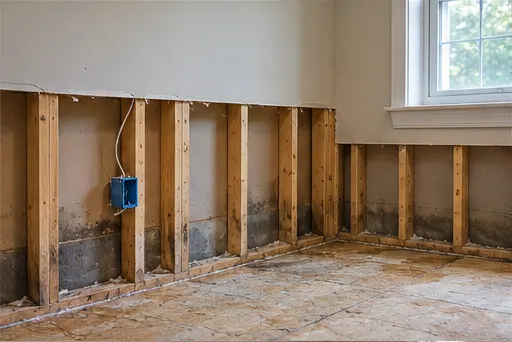
A visible stain, swollen trim, or soft finish can help identify a place to investigate, but a wall is made of layers that may respond differently. Paint and wallboard cover structural framing, insulation, fasteners, and sometimes utility lines. One observation on the surface does not tell you which of those materials was affected. Ask what the inspector observed and what additional access would be needed to assess the layers behind the finish.
The reason for opening a wall matters. It might be proposed to look for damaged material, provide access, or remove a section whose condition could not be addressed while it was closed. Ask where opening would start, what it could affect, and what would cause the scope to expand. If you need another party’s approval, ask the contractor to identify the specific surface and proposed limits in writing before work begins.
When older finishes are involved, ask whether the proposed work needs a separate assessment for hazardous materials. EPA guidance on cleanup in damaged buildings includes precautions around materials such as asbestos and lead paint. The presence of an old finish does not establish that it contains a hazardous substance. Equally, it should not be disturbed solely to see what lies behind it. Discuss who can assess the concern, what work must wait, and how the findings will be shared.
A useful wall record names the room and wall, identifies the height or area involved, and notes what was accessible before and after any opening. Where possible, have the contractor distinguish materials removed from materials preserved. That distinction will help when estimating insulation, wallboard, trim, finish, or repainting later. It also gives whoever reviews the work a clearer basis for comparing what was proposed with what was actually done.
How flooring construction changes the questions
Ask the assessor to identify the type of floor and what is beneath it. Tile, carpet, laminate, engineered wood, and other materials can look similar from above after visible water has been picked up. They may differ in how they are attached and whether moisture can remain below the visible surface. A qualified professional can explain what can be learned by examining an edge or transition and what would need more access.
For a tiled floor, a useful question is whether there is evidence that water reached openings, adjacent finishes, or a layer that cannot be seen. For carpet, ask separately about the carpet, the pad, and the material underneath. For a wood or laminate surface, ask whether swelling, movement, finish changes, or wet material nearby affected the recommendation. The answer may differ from room to room even where the floor looks continuous.
Ask what will happen to thresholds and transitions if a floor needs to be opened or replaced. Matching finishes can be a separate repair issue. The decision about a dry or damaged assembly is distinct from the later question of whether a new material can be matched to the adjacent room. Have the person quoting restoration explain what, if anything, their proposal includes for reinstating finishes.
Write down how the retained material will be evaluated before you approve covering it. EPA flood cleanup guidance discusses hidden moisture and the value of material measurements before refinishing. A floor installer may have requirements specific to the materials they propose. Ask what records the installer needs from the drying team, and when the installer will make their own decision. The person closing up the floor should be able to explain the conditions they relied on.
Cabinets and other built-in finishes
Water below a sink or around an appliance can affect more than the visible cabinet surface. Built-in elements may sit over flooring, hide gaps at the wall, or mask the edges of materials that are hard to inspect. Ask which sections of the cabinet were accessible and whether the area below or behind it was visible. It may be helpful to identify separate components such as shelves, side panels, toe kicks, and countertop supports in the scope.
If work near a cabinet affects another trade, establish the sequence before agreeing to a removal. An appliance, water line, sink, or electrical connection may need attention from a qualified professional. Have the restoration and repair estimates explain who will handle temporary disconnection, removal, and return visits. Ask how the work will proceed if a fixture cannot be safely moved when the restoration team arrives.
If preserving the cabinet matters to you, ask what the tradeoff is between further observation, access to dry hidden material, and damage to the finish. The answer may depend on construction and affected materials. Ask whether a proposed access point would be visible afterward and what repair might be required. If a cabinet is older or custom-built, ask whether a specialist should evaluate options for keeping or reproducing a component.
Keep records of finishes and hardware that may need to be matched. A photo or material description taken safely before work can aid a later repair quote. Ask who is responsible for protecting, removing, and returning any parts being kept. If a quote says “save existing doors,” for example, verify whether it also includes references to the drawers, hinges, hardware, and finish. These are planning details you can settle without guessing at the condition of hidden surfaces.
Ceilings, overhead water and restricted access
Water from an upper level sometimes becomes visible only when it reaches a lower ceiling or fixture. The location where you see it may not match the route by which it traveled. Tell the contractor what the rooms above and below are used for, whether they were accessible, and whether anyone has seen water continuing to enter. If there are visible hazards or wet electrical components, remain out of the affected area and consult the appropriate professional.
Questions for the estimate include who will inspect the upper room, what could be checked from below, and whether a separate trade needs to verify a fixture or supply line. In a multi-unit building, this may require appointments arranged through management. If the upstairs room was unavailable, make sure the report identifies that limit. Ask which portion of the plan was based on observed conditions and which portion depends on a later inspection.
Decide where people and belongings can be while work is in progress. A scope may require temporary access restrictions around equipment, under an opened assembly, or near an entry. Let the contractor know if an affected room has an important exit or contains equipment you need. Ask for the planned access path and a time when a supervisor can update you about changing conditions.
When it is time to plan repair, ask what has been confirmed about the ceiling or wall assembly and what remains open. A refinishing quotation can identify drywall, texture, paint, trim and fixtures separately. Review whether it covers only the opened area or an adjoining surface that might be needed for a consistent finish. That is a separate decision from whether the structure is ready for the next stage, and the people preparing the quotes should explain both.
Ask how equipment, monitoring and access are priced
When equipment is included, find out how the proposal describes it. A quote may use equipment days, visits, a fixed scope, or a combination. Ask whether the quoted time is estimated and how extra days would be approved. Find out what you will be told if equipment will be moved, added, or removed. This makes a later invoice easier to understand and gives you a way to record a legitimate change in scope.
Ask how monitoring visits will be coordinated. For a home with limited access, a missed visit can create inconvenience and leave the team without an observation it expected to use. Agree who can let the team in and whom they should call when a planned access time is unavailable. If the proposal assumes open access during business hours, tell the contractor about any building sign-in rules before you accept it.
Check how the contractor expects to communicate issues that affect the plan. A power interruption, change in access, or a separate leak may make earlier assumptions inaccurate. Ask how the site contact should report a concern and who can decide whether to adjust equipment. Nobody in the household should improvise around wet electrical equipment. Ask the contractor to describe the safe operating boundaries for the particular site.
Review monitoring and equipment at the same time as your scope. A seemingly shorter equipment estimate may have been written for a smaller area. A longer estimate may reflect difficult access or a different group of materials. There may also be a difference in what the proposals include for measuring progress. Have each contractor explain the expected decision at the end of the period and what evidence will support it.
Use a record of measurements you can read later
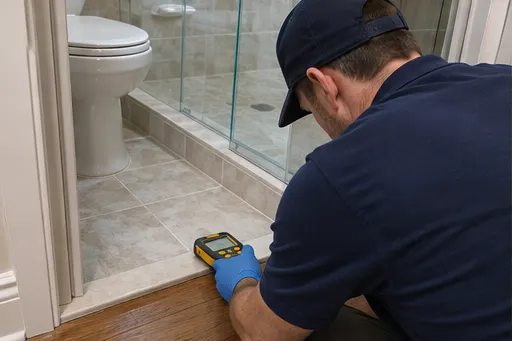
When a contractor records measurements, ask for a format that lets you connect a number to a particular place. A measurement log can identify the room, material, location, and date or time. If the contractor identifies a reference area or a material-specific criterion, ask for that explanation alongside the numbers. This can be especially helpful where the repairs will be handled by a different person.
A consistent reference location makes a sequence easier to follow. A reading close to one door should not be confused with a value taken on the other side of the room. Similarly, a reading from one material may not answer questions about a neighboring layer. Ask whether the team can identify important points on a sketch or refer to labeled photos. This is useful documentation even if you do not need to interpret the raw numbers.
Ask about boundaries in the final record. If a room was inspected but a closed cavity was not, the paperwork should identify that distinction. If a flooring product has a separate condition for installation, ask the installer what they require. A drying record and an installer’s substrate assessment can serve distinct purposes. Discuss who is responsible for each so that neither one is assumed to have been done simply because work progressed.
If a contractor plans to keep some material and remove other sections, ask how the recorded findings support each choice. A wall edge with repeated moisture concerns may be handled differently from an intact area that has remained within the agreed criteria. The log can also help identify any areas waiting on a specialist. Keep the final version with the scope, source repair documents, and a contact for follow-up questions.
When to separate contents work from building work
Personal contents can complicate a restoration scope because their value, materials and suitability for treatment vary. A contractor’s proposal for the building may cover moving furniture out of a work area without including item-by-item cleaning, specialty assessment, transportation or storage. Ask which items are included and whether the estimate counts them individually or by room. If a box is labeled only with a room name, you may need a separate inventory for its contents.
Flag items that are especially valuable, fragile, or important to the household. These might include family papers, artwork, collectibles, electronics, heirlooms or equipment needed for work. Ask whether the person handling them can assess the relevant material and whether they recommend a specialist. Save any records of condition taken before moving the items. Use clear labels and be selective about sharing photos that show personal or identifying details.
For any off-site storage or specialist work, clarify who is responsible at each stage. Ask where the items will go, how they will be identified, whether storage and return are included, and what happens if you need early access. Have the person providing the service explain how a damaged or disputed item will be documented. If your insurer has documentation requirements, confirm them with the insurer.
Do not assume every porous material can be restored or every hard surface needs to be discarded. EPA guidance distinguishes between materials that can be appropriately cleaned and dried and those that absorb water and cannot be adequately addressed. Particular decisions depend on the conditions and the item involved. Ask the appropriate professional about a valuable or sensitive item before arranging disposal or trying a treatment yourself.
Discuss contamination before deciding on the plan
Describe the source as accurately as you can. A damaged supply pipe, an overflow from a drain, and water entering from outdoors can pose different problems. Include uncertainties in the description. For example, if you found standing water after a storm but did not see where it came in, say that. A person making a plan should consider the source and conditions rather than assume safety from water that looks clear.
Keep occupants away from floodwater and suspected contamination. CDC guidance warns that floodwater can contain substances that cause injury or illness. If a drain or sewer backup is suspected, identify the affected areas to the professional from a safe location. EPA guidance recommends experienced help for sewage or other contaminated water. Confirmation of the job scope should include whether the contractor can handle the conditions, if a separate specialist is needed, and what access restrictions should be followed.
Ask about work that could spread material or change conditions. In a house with a suspected affected HVAC system, consult a qualified HVAC professional before operating it. If a damaged assembly may contain a hazardous material, ask who will evaluate that question before disturbance. These are distinct from the decision about the original water source. A professional can explain which work can continue and which needs to wait for an assessment.
Ask what the documentation will state before rebuilding. If a contractor recommends cleaning, removal, drying or referral, the scope should describe the areas covered and the limits. A site report can identify a remaining concern that requires separate evaluation. The presence of an unresolved issue is a reason to ask what responsible next steps are, rather than assume a cosmetic repair addresses it.
Read exclusions and allowances before agreeing to a quote
An exclusion tells you where to expect a separate decision. The scope might exclude repairing the original source, changing building finishes, moving heavy objects, removing suspect hazardous materials, or work in rooms that could not be entered. Ask which exclusions are likely to matter in your property. If the scope does not state who will handle excluded work, identify the responsible trade before the date it is needed.
An allowance or provisional item is different from an exclusion. For instance, an estimate may include a limited amount of material handling based on what was visible and note that access could reveal more. Ask what is included in that allowance and how a change will be communicated. If the team says it will seek approval when it finds a different condition, ask who will receive the request and what information it will include.
Some decisions are based on price, and others depend on the technical result. If a person offers to remove additional material for a fixed price, ask why it is proposed and what problem the work would solve. If an estimate assumes all equipment can be removed at a particular point, ask what would make that assumption invalid. Have those answers tied to the affected rooms or materials so another reader can follow them.
Compare the work and documentation included in each proposal. An estimate may cover fewer visits, leave an area for a trade not yet identified, or assume the property will remain accessible. Each may be appropriate in a particular situation. The comparison is useful only when you can see whether the contractors are solving the same problem. Ask the person signing the agreement to know what they need to approve before work exceeds the agreed scope.
Check who is providing the work and who signs off
Identify the business on the estimate, the person coordinating the site, and the parties that may perform different portions of the work. After a loss, service calls can involve a property manager, insurer, plumber, restoration contractor, and repair firm. Clear names and responsibilities make it easier to confirm who can enter, who can approve changes, and whom to contact if an issue remains unresolved.
For work that requires a California contractor license, use the Contractors State License Board resources linked below to check status and classification. Ask for the name and number associated with the agreement, and verify it against the official lookup. The appropriate qualification varies with the work and circumstances. A separate certificate, review, or affiliation should not be treated as proof that the organization is authorized for every task under consideration.
Ask how the team will deal with a problem that falls outside its role. For instance, an inspector might identify an electrical concern while working in a wet room. Who will refer the issue, who is authorized to act on it, and what happens to the restoration plan in the meantime? Written assignments make this clearer, especially when the building manager or owner is not present for all visits.
Before accepting the end of a stage, confirm who will sign off on it and what they are actually checking. Restored access, the end of equipment monitoring, the fitness of a surface for installation, and claim acceptance are different milestones. An owner may arrange an additional inspection before proceeding to repairs. Put the person responsible and the outstanding items beside each milestone so that a report from one party is used within its intended scope.
After the drying stage, prepare a repair handoff
A repair proposal can be more accurate if it starts with a record of what changed during restoration. Ask for a list of opened surfaces, materials removed, and items that remain in place. Give the repair contractor any relevant photos and the underlying observations that support the handoff. If a finish must match an adjacent surface, identify that decision early so the proposal accounts for the transition.
Confirm whether an area is waiting on a measurement, a source repair, or a separate inspection. An open issue may affect the start date or choice of repair materials. For a floor, ask the installer about its substrate requirements. For a wall, ask what will be needed before it is enclosed. For cabinets or fixtures, clarify which elements can be reinstalled, which must be replaced, and why. Avoid assuming the same person can sign off on each stage.
Keep access and scheduling notes with the technical documents. A repair contractor may need to visit before all occupants return, or a building manager may need to coordinate the time of entry. Agree which doors or service spaces remain accessible and whom the repair team should speak with for questions. If a concern arises during repairs, give the new contractor a clear way to contact the previous one with the relevant location and history.
The handoff ends with a record both parties can understand. It should make clear which tasks were completed, which conditions still need attention, and who will supply any missing report. Confirm whether the invoices describe the final agreed scope, including changes. If a finish is later damaged again, a record of the original loss and repairs helps the people evaluating the new problem distinguish history from current observations.
Questions to bring to a service estimate
Can I compare a verbal estimate with a written one? Ask each provider to explain the rooms, materials, and tasks it covers in a usable written form. Record the date and scope changes. The useful comparison is between equivalent work and assumptions. A quick verbal estimate may be helpful for triage, but an itemized proposal is easier to review before committing to work.
Can I get a firm completion date before an inspection? Ask which parts of the schedule can be confirmed at the time of the estimate. Access, the condition of concealed materials, and coordination with other trades can affect later dates. Request a practical time for an update and ask what information would let the contractor narrow the estimate. Share a hard deadline early so the people coordinating the work can discuss the options.
What should I ask if a material will be left in place? Ask how it was evaluated, whether its inner layers or edges could be assessed, and what evidence or limitations will be recorded. If another trade will install a finish over it, ask that trade whether an additional check is needed. A decision to retain material is easier to understand later when the reasoning is in the report.
How do I ask Mr. Restoration about my property? Call with your ZIP code, the rooms involved, and what is known about the source. Explain any access or safety concerns before scheduling. The public business profile lists water damage restoration and 24-hour opening. The person taking the call can confirm whether your location and circumstances can be handled. If you are collecting estimates, say what stage the job is in so the discussion can focus on the help you still need.
 MR. RESTORATION